Does Rapid Agricultural Growth Require a System of Innovation? Evidence from Ghana and Burkina Faso
avril 18, 2014Mise en œuvre du projet de formation des élus locaux en matière de développement durable et d’économie verte
avril 26, 2014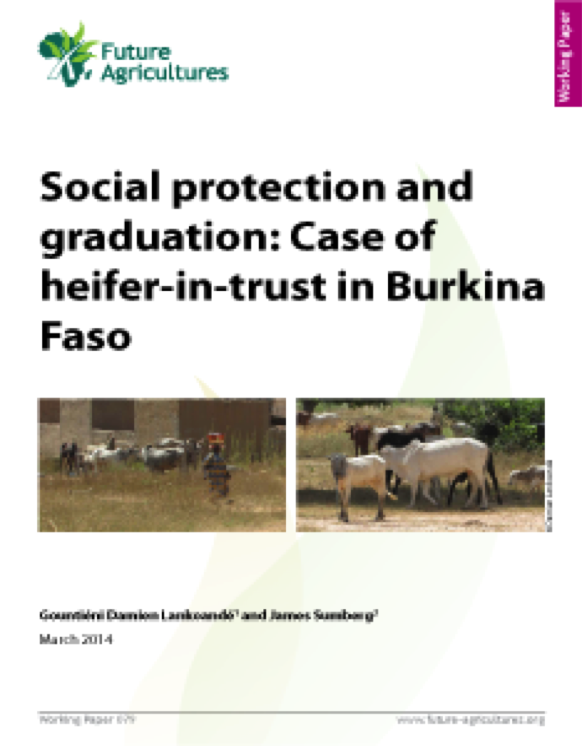
Authors: James Sumberg and G. Damien Lankoandé

Summary
The distribution of livestock to poor people, commonly known as heifer-in-trust (HIT) or ‘livestock-in-kind credit’, can be seen as a specific type of asset-based social protection. Because of their growth and reproductive potential, some suggest that livestock can play a particularly important role in asset accumulation and thus graduation. This study tests the assumption that livestock will remain a part of the asset portfolio of HIT recipients.[wpdm_package id=’1584′]